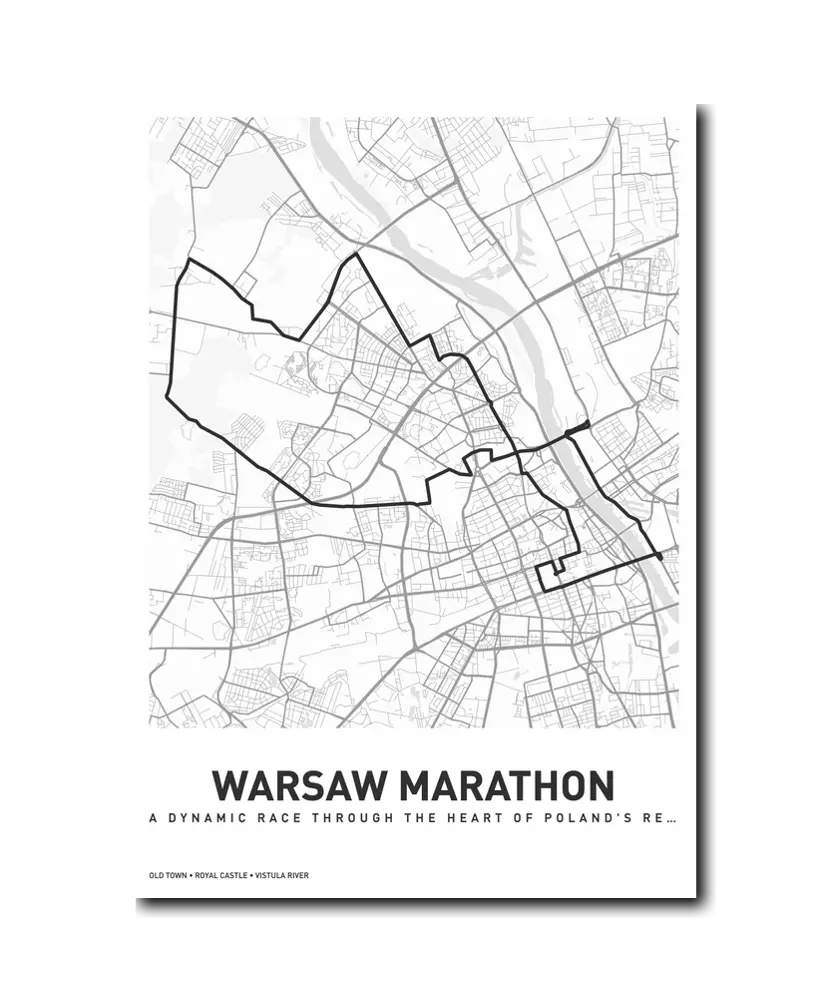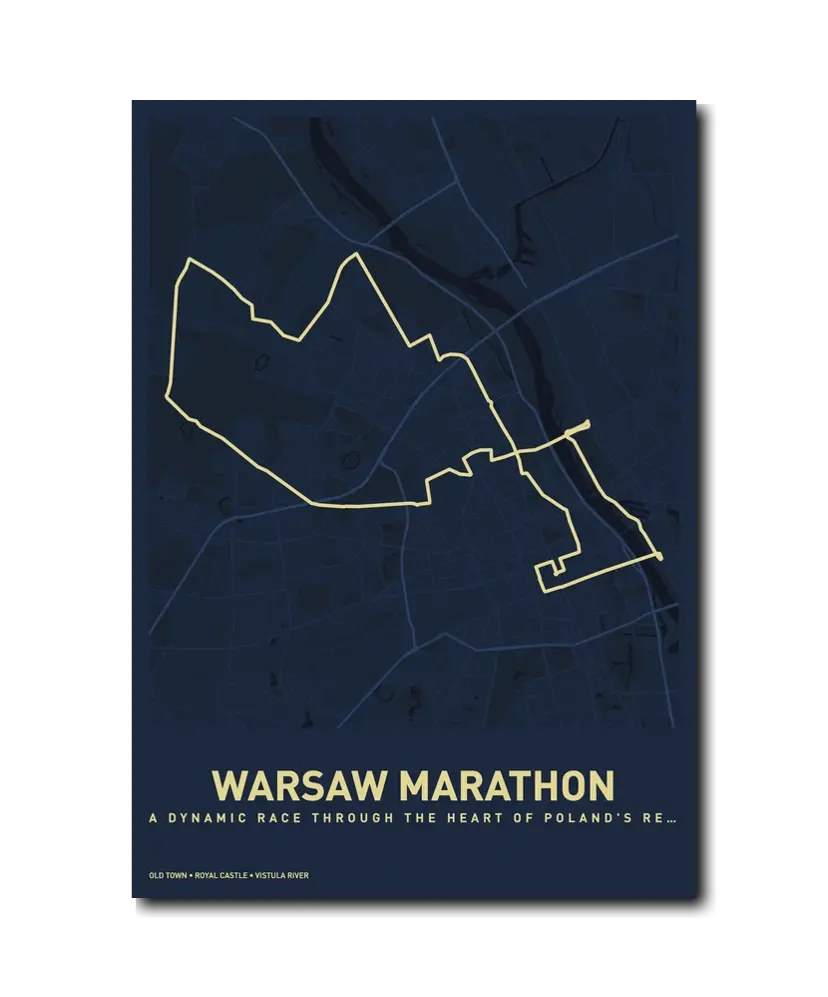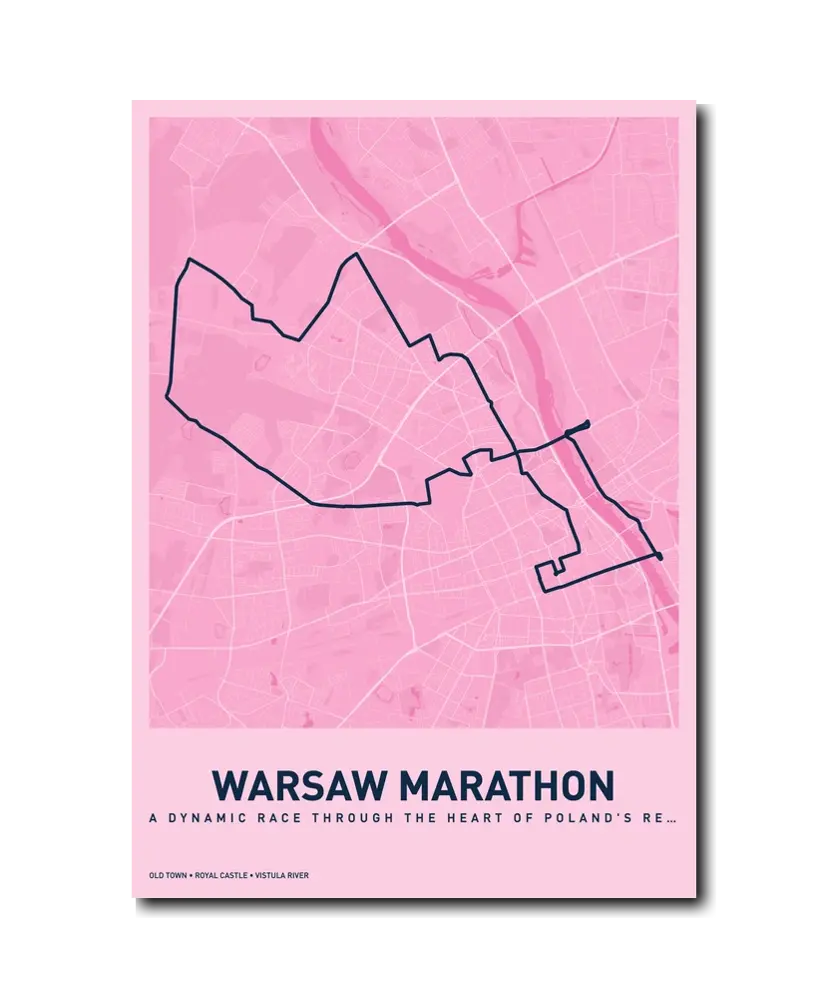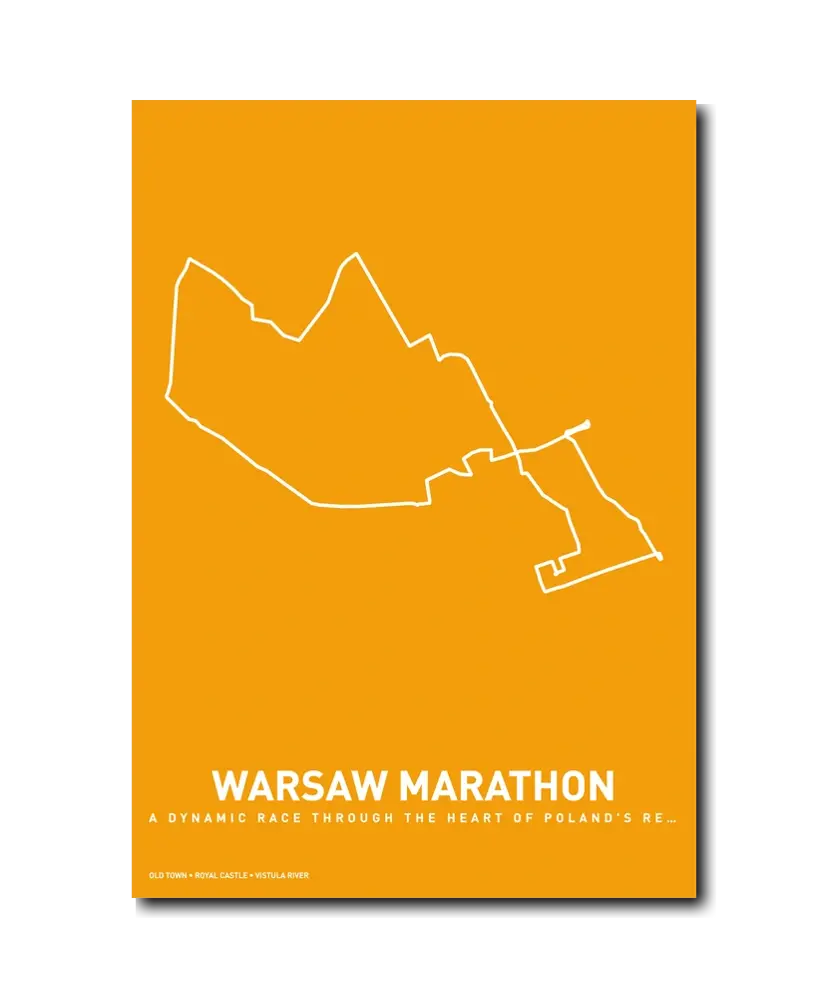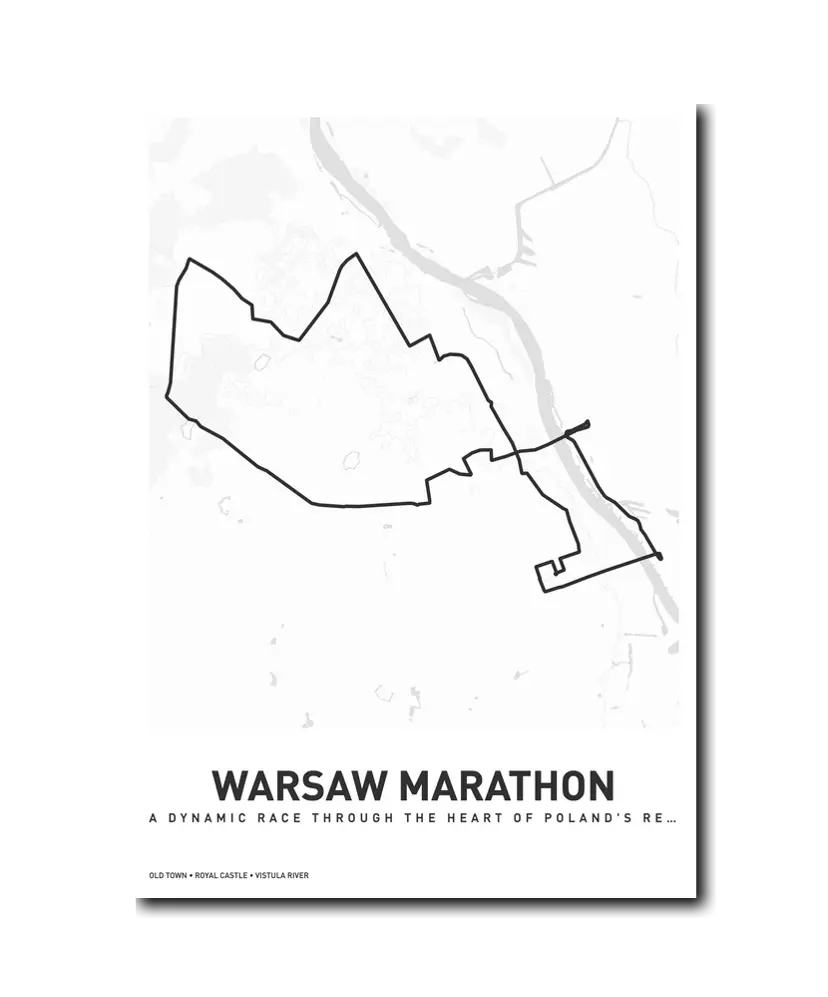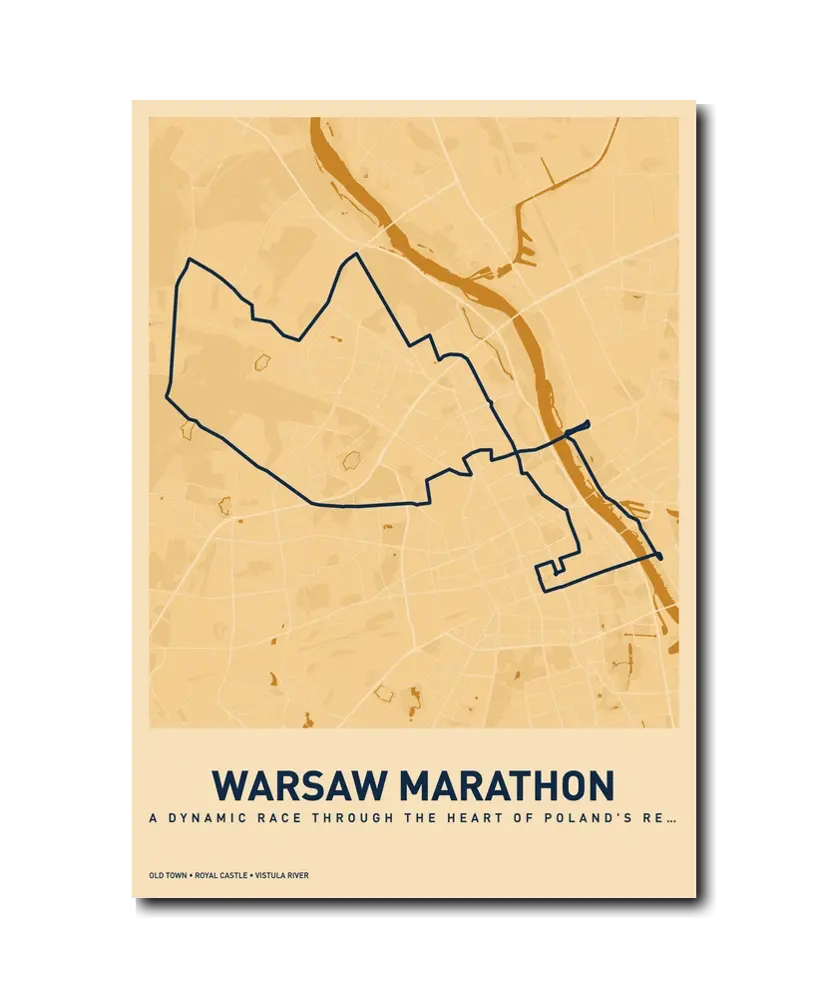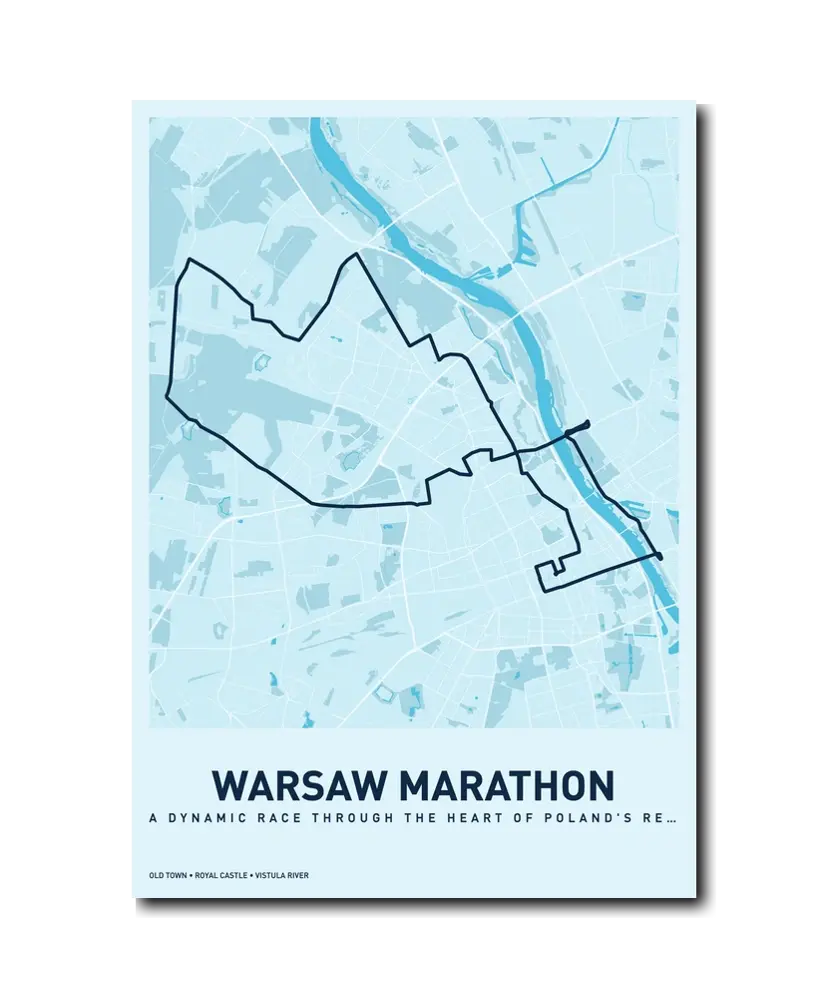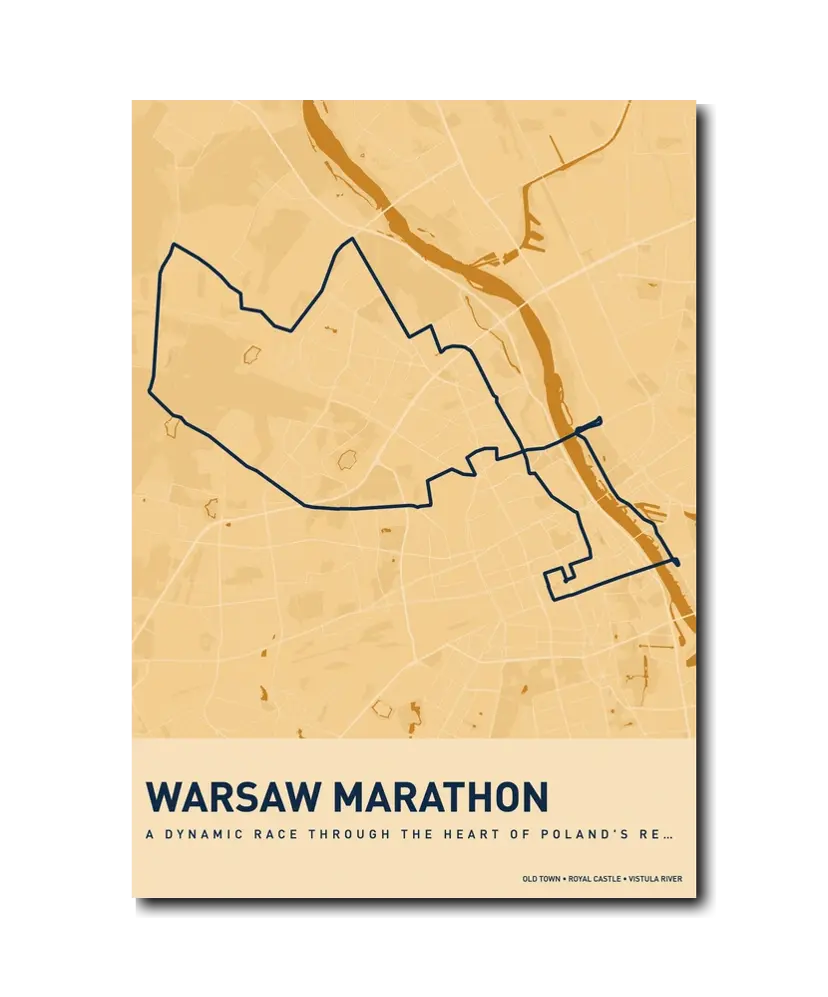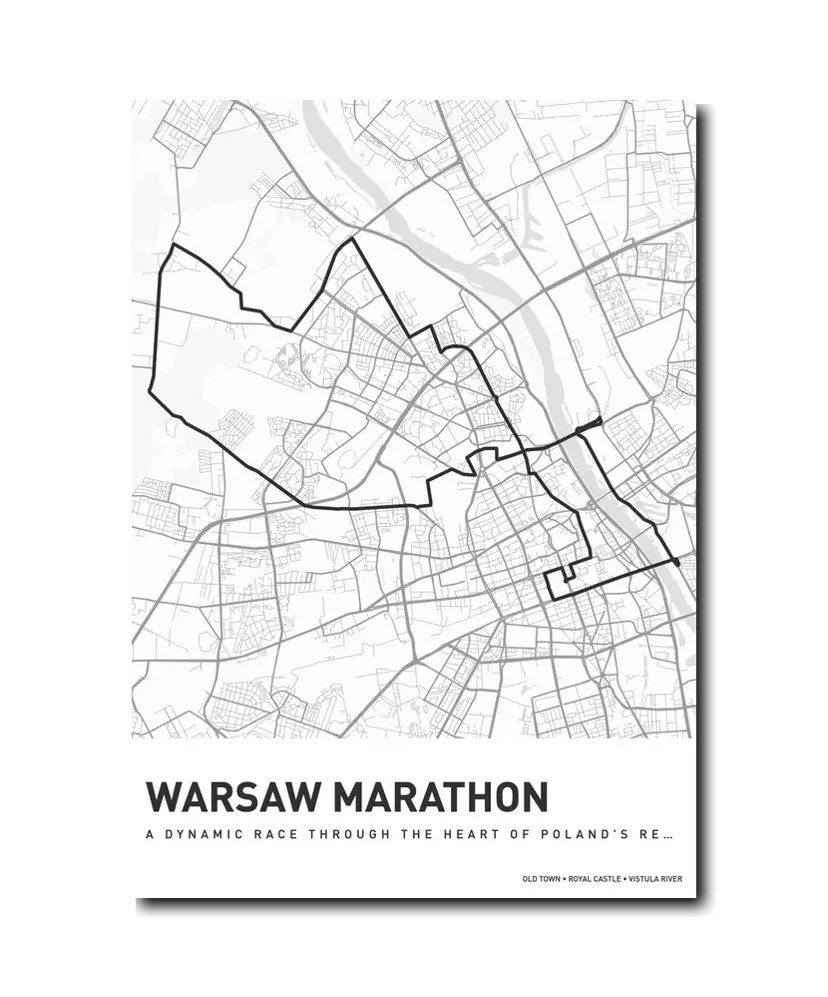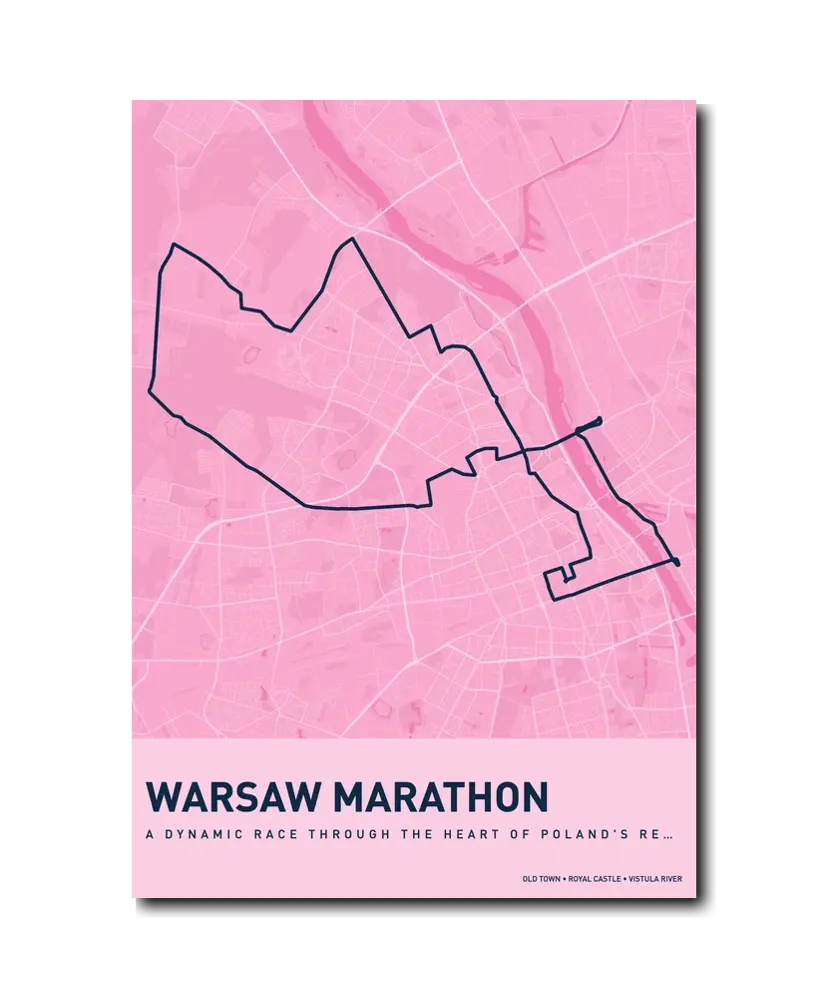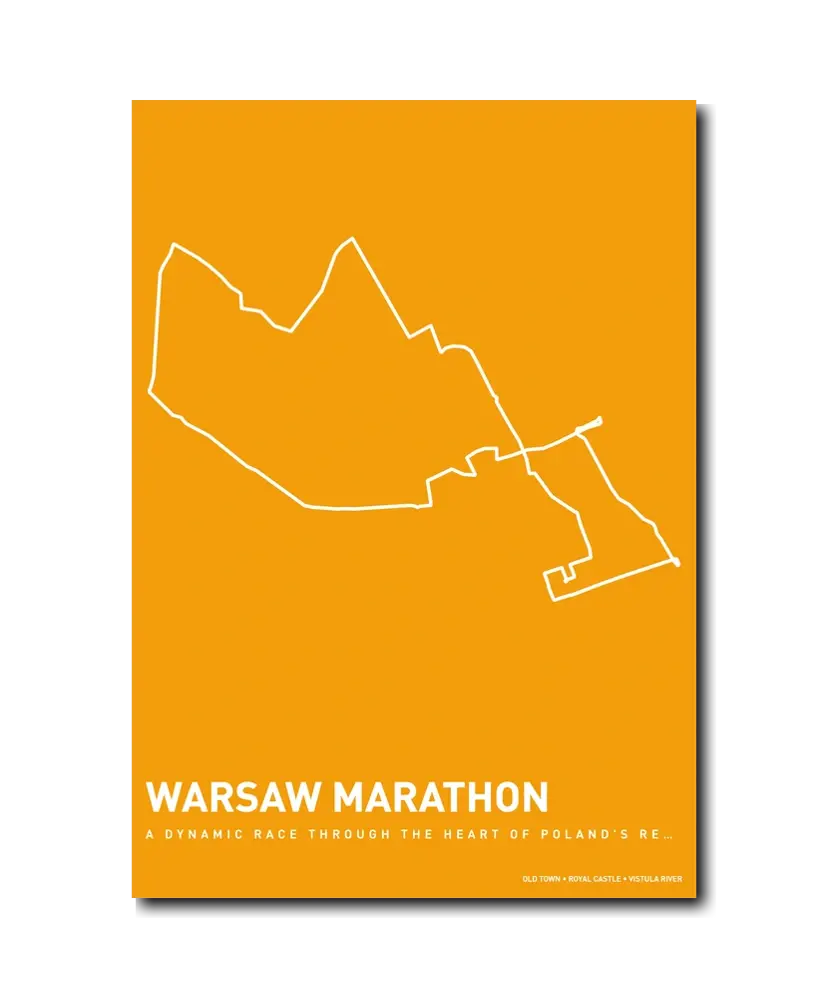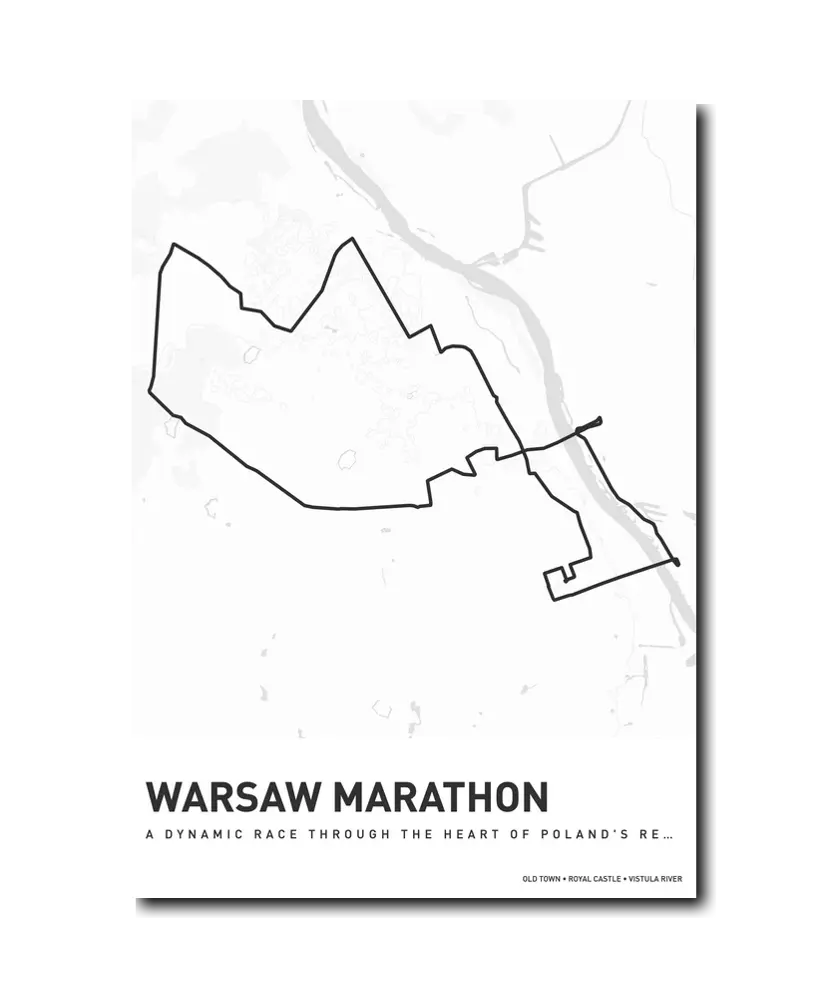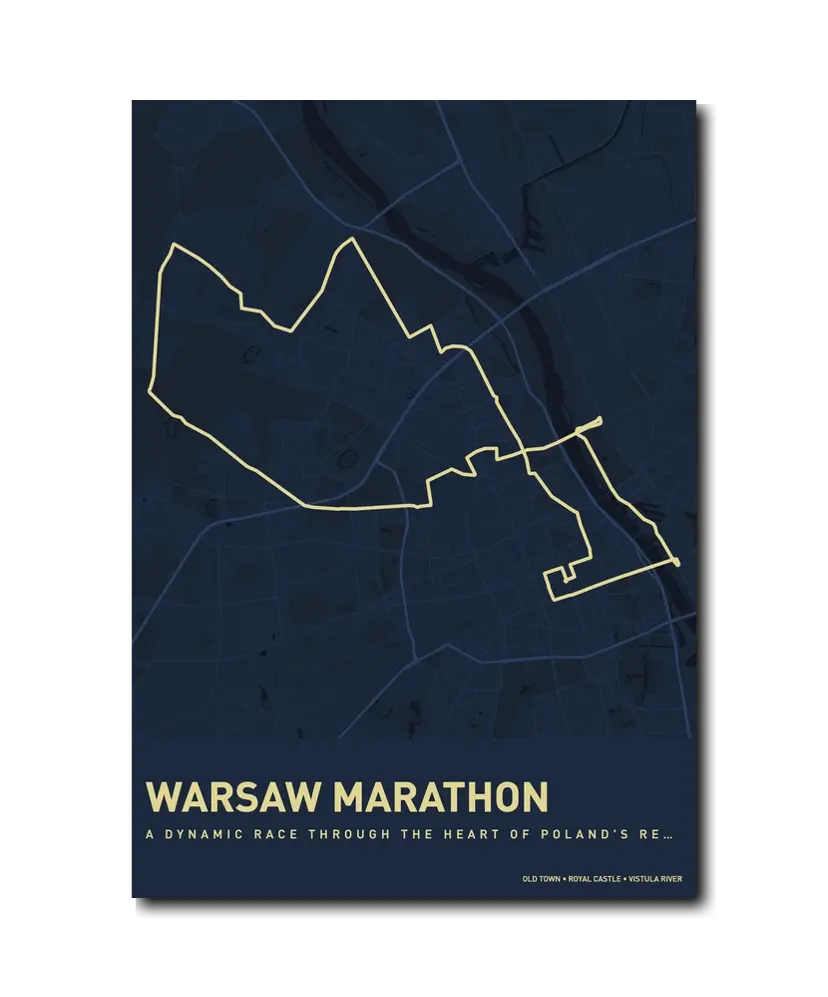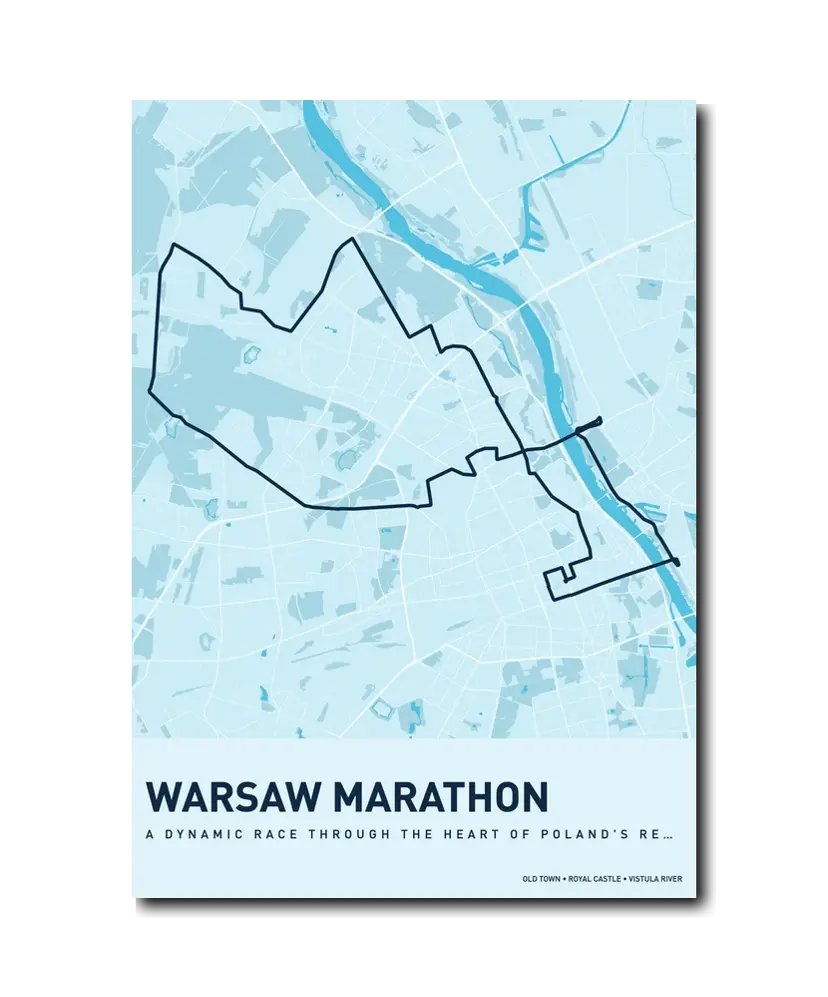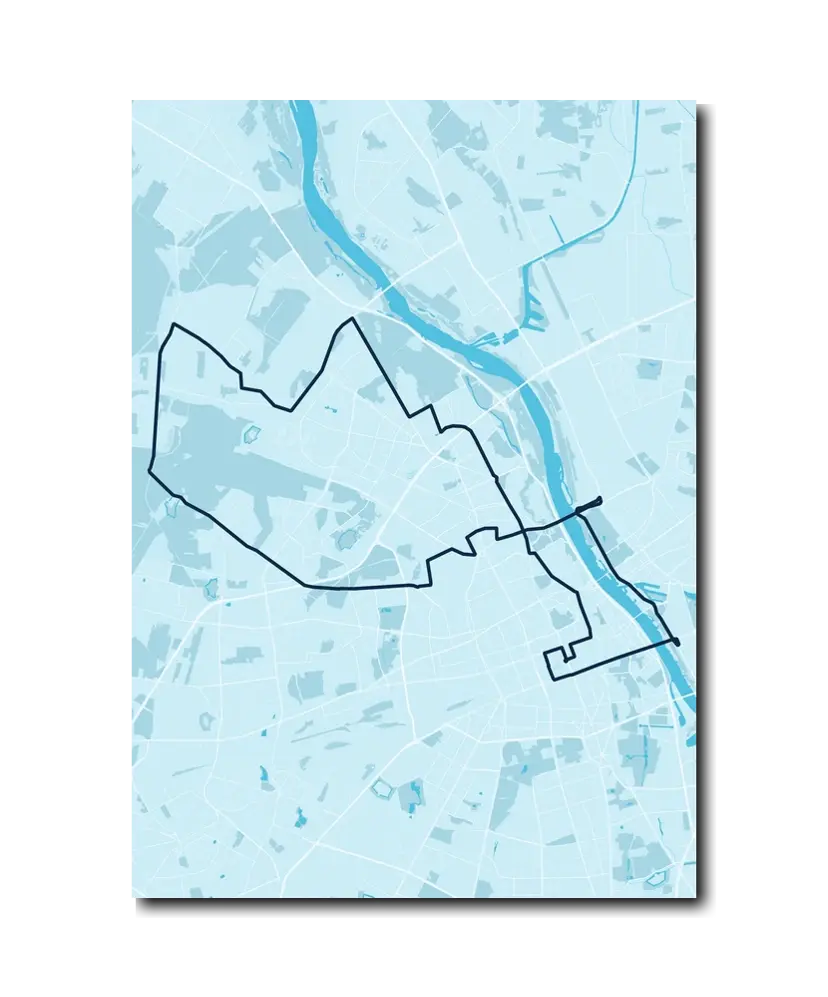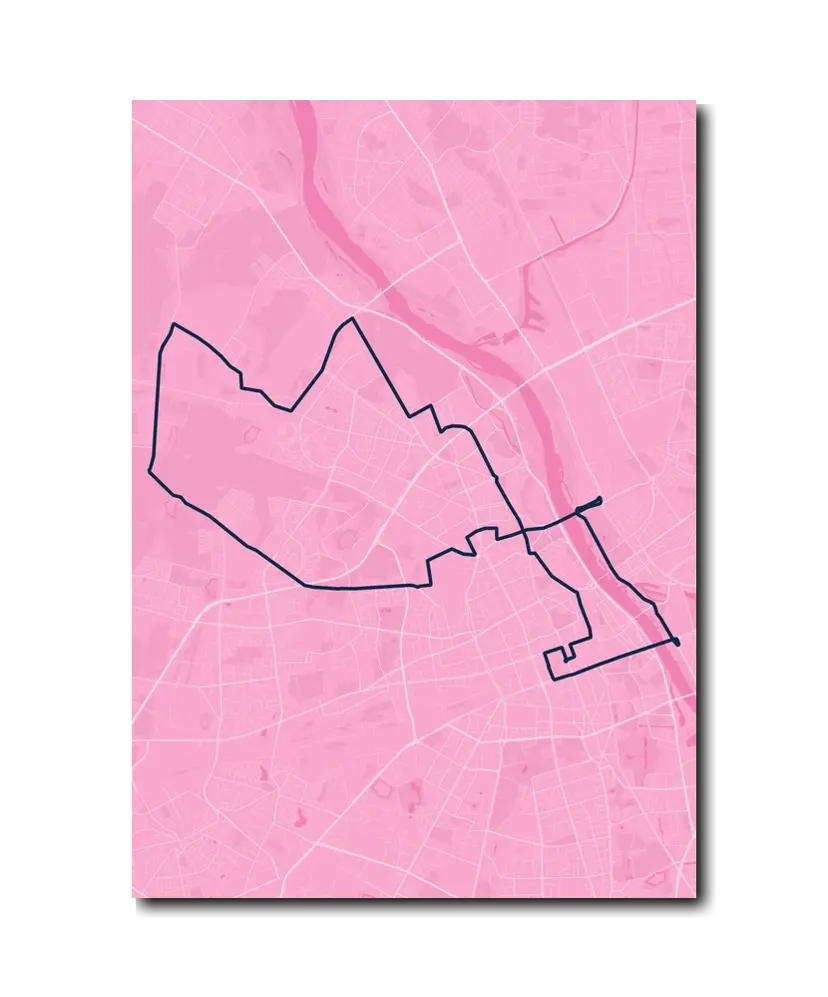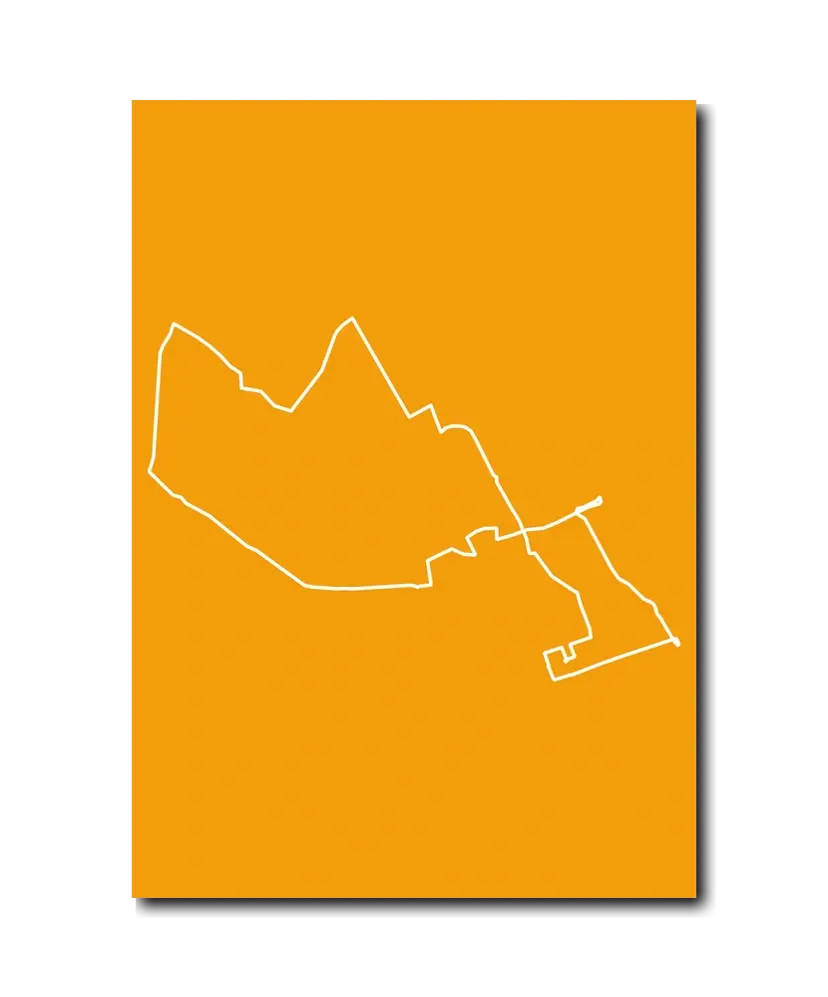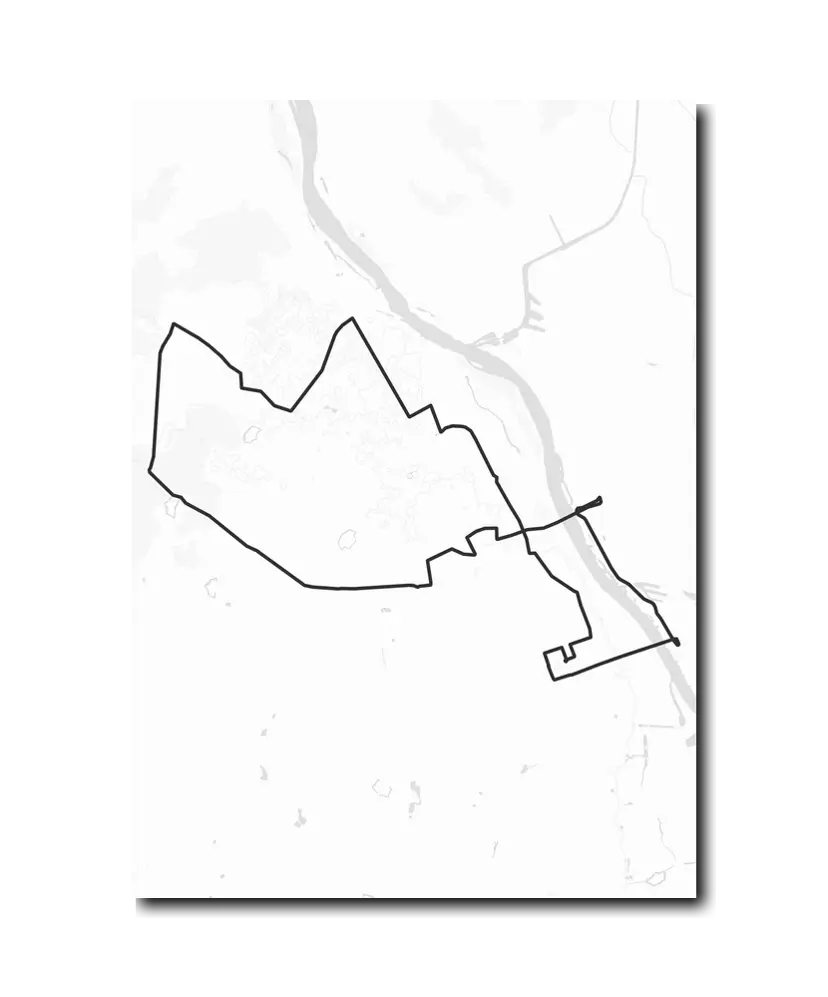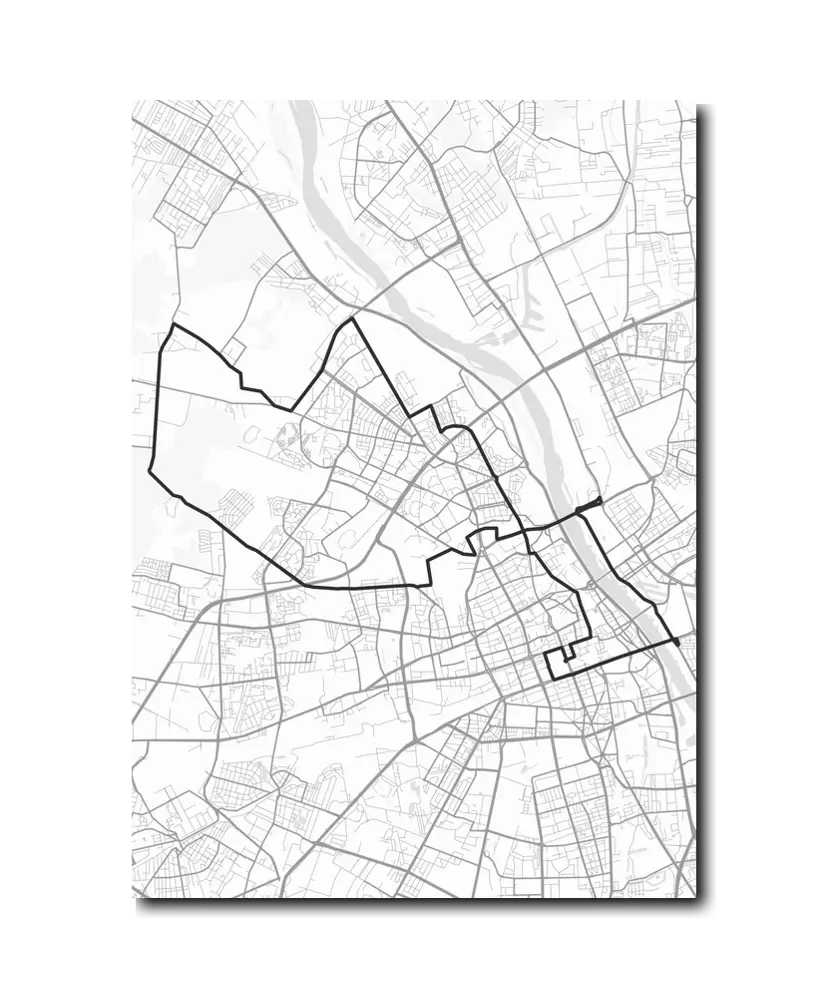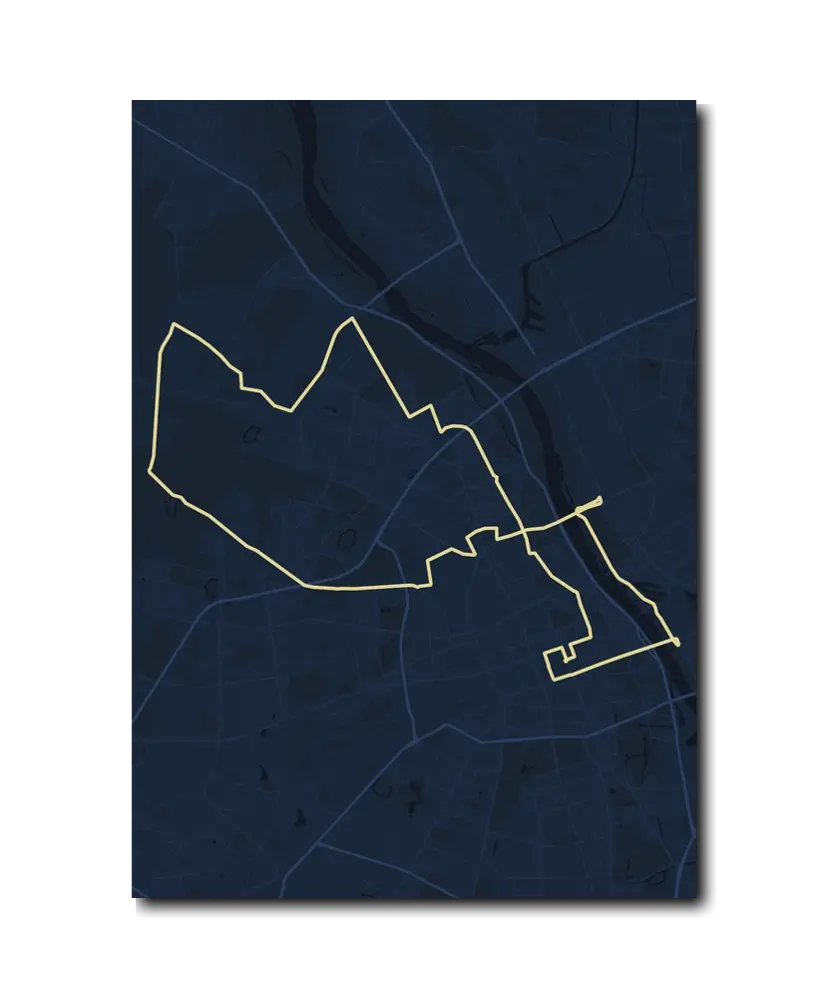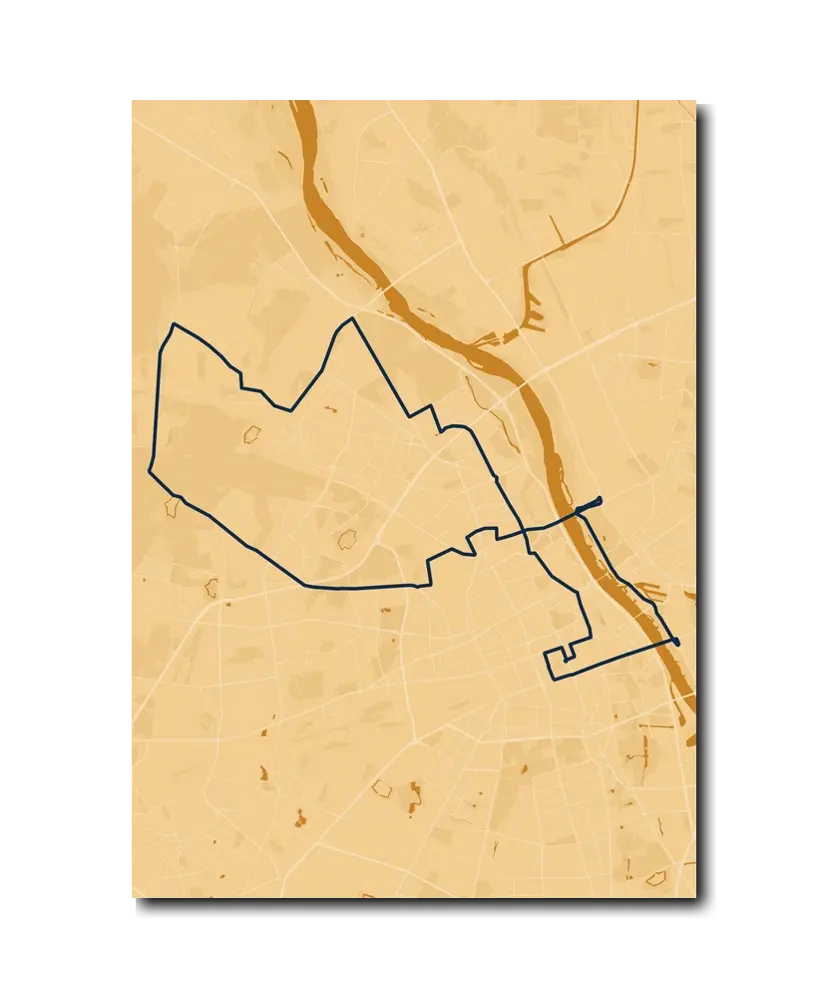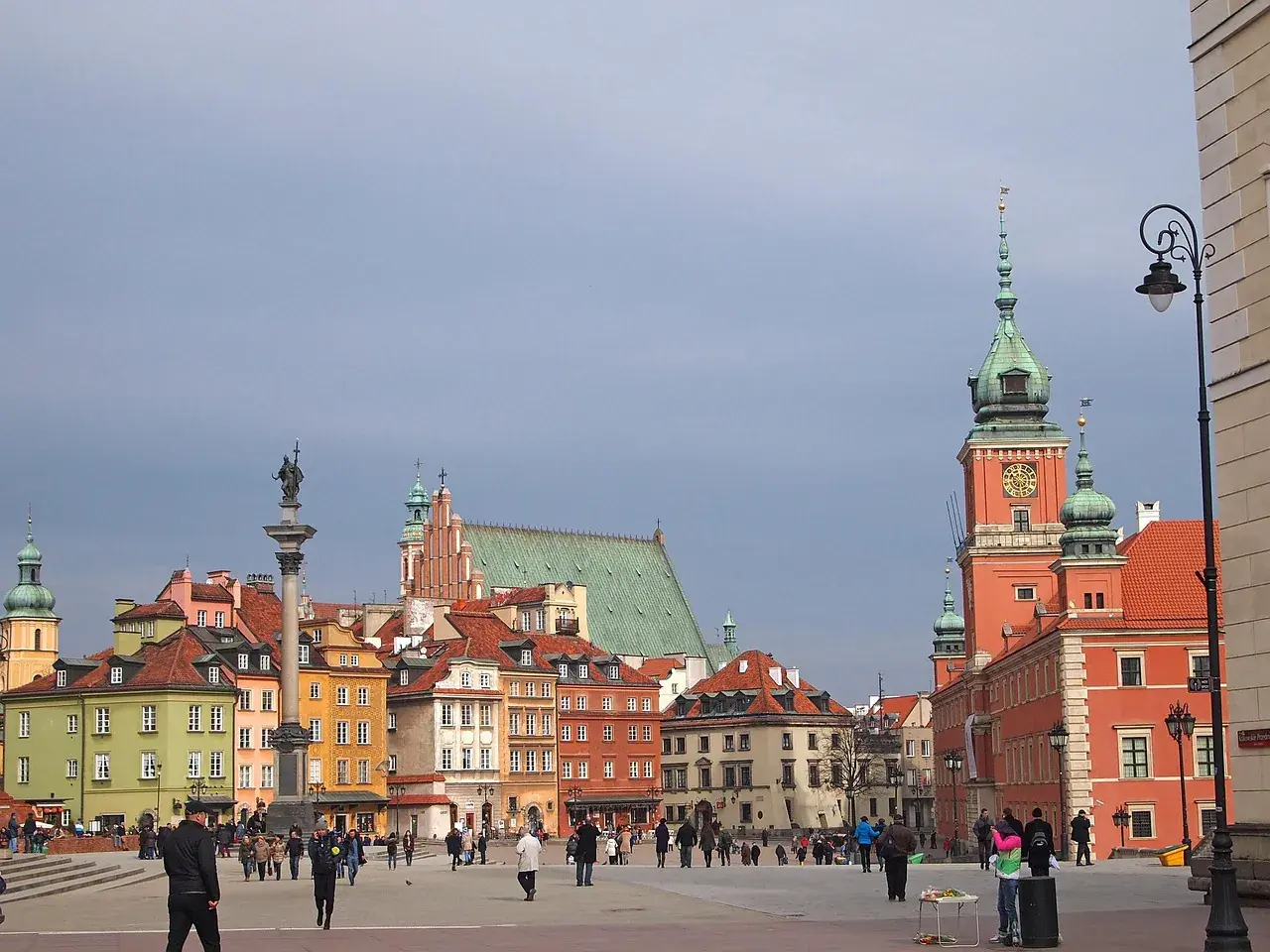
You ran through a city that should not exist. Warsaw's Old Town was levelled in 1944 and rebuilt, stone by stone, from historical photographs and paintings — and the marathon takes you right through the middle of it. There is a particular feeling to running cobblestones that were laid by hand from memory, and it is the kind of thing that stays with you longer than your split time. A Warsaw Marathon finisher poster captures the route that made that possible: the river, the old town loop, the park.
PZU Warsaw Marathon at a glance
- Course profile: Loop starting and finishing at the National Stadium; rolling, with around 200 metres of total elevation gain
- Signature sections: The Vistula riverbank boulevard and the Old Town loop through the UNESCO-listed historic centre
- Race date: Late September, typically the last Sunday of the month
- Field size: 8,000–10,000 marathon finishers; open registration, no lottery
- Distinctive fact: The rebuilt Old Town gives this course a character genuinely unlike any other European city marathon
The course
The race starts inside the PGE Narodowy — the National Stadium — on the east bank of the Vistula, and the first kilometres track north along the Vistula boulevards. These are wide, purpose-built riverside paths with a long view across the water to the Warsaw skyline on the opposite bank. The Palace of Culture and Science — Poland's tallest building, a Soviet-era gift that dominates the city's silhouette — is visible to the west for much of this stretch. The riverbank miles are where Warsaw reveals its scale: a big, flat, eastern European city that does not fit any easy template.
Around 10K the course crosses to the west bank and begins to work through the city centre. The Old Town section comes in the mid-race miles. The streets narrow, the cobblestones arrive, and the reconstructed medieval facades close in on both sides. The Royal Castle sits at the edge of the old town square. It is the most photogenic stretch of the course and also, for a few hundred metres, the most demanding underfoot — the kind of section that looks striking on a custom route map precisely because the GPS line tightens and turns where the rest of the course opens up. The Palace of Culture looms on the left as you exit south.
The route then drops into Lazienki Park — the 18th-century palace park in the centre of the city — before working its way back east toward the river. The late-race miles are rolling rather than flat, and by the time the National Stadium comes back into view you will have earned the sight of it.
The Warsaw Marathon is still growing into its reputation, but the course already has more genuine character than most European marathons twice its size. The combination of the Vistula boulevard and the Old Town loop is unusual enough that the route reads clearly the moment you see it printed. makemap lets you render that GPS trace — river, old town, park — as a finisher poster that holds what the race actually felt like.
Choose your canvas
Turn your achievement into art and commemorate your journey with a custom map poster or wearable
Start CreatingReady to Commemorate Your Achievement?
Whether you've completed this event or are planning to, create a stunning map poster or wearable to celebrate your journey.